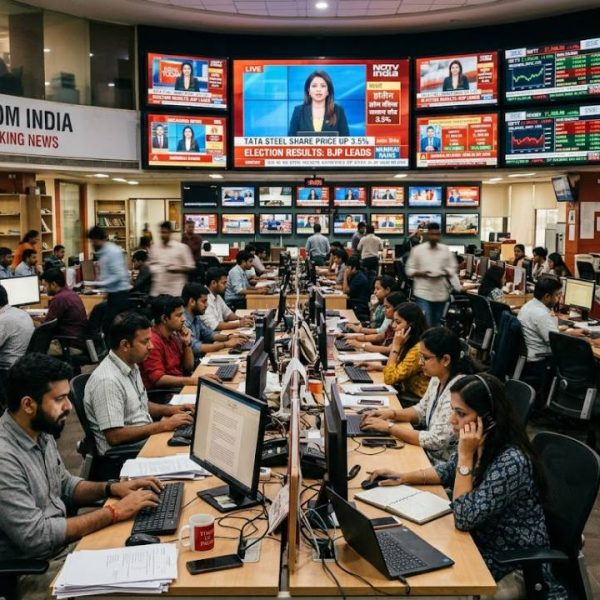

India is now one of the fastest growing major economies, and its companies are reaching customers far beyond the subcontinent. Startups in Bengaluru, manufacturers in Gujarat and service providers in Hyderabad all share a common challenge: speaking to buyers who do not use English as their first language, and sometimes not even Hindi.
The country itself is a lesson in multilingualism. With 22 officially recognised languages and hundreds of dialects, Indian businesses learn early that one message does not fit all. The same lesson applies when they go global.
A market built on many languages
A national campaign in India often needs versions in Hindi, Tamil, Bengali, Marathi, Telugu and more. Consumers respond best to messages in their own tongue, even when they understand English perfectly well. For a broader picture of the scale and structure of the market, see the article on the Economy of India.
The growth of smartphones and cheap data has pushed regional-language content to the front. News apps, shopping platforms and payment services all compete to serve users in their preferred language.
Why exporters need the same approach
An Indian software firm selling in Germany, or a textile maker supplying shops in France, faces buyers who expect clear documentation in their own language. Product sheets, contracts, certificates and websites all shape first impressions.
- Product catalogues and technical datasheets
- Terms of sale, invoices and contracts
- Regulatory and quality documents
- Websites, apps and marketing campaigns
- Customer support articles and onboarding emails
Errors in any of these items slow down negotiations and raise doubts about reliability.
What goes wrong with literal translation
Word-for-word conversion misses tone, idiom and local expectations. Indian English has its own phrases, such as prepone or do the needful, which confuse readers elsewhere. Likewise, European buyers expect a more reserved tone than the enthusiastic style common in some Indian marketing.
Numbers add another trap. Indian numbering uses lakh and crore, while most of the world counts in thousands and millions. A price or a sales figure expressed carelessly can be misread by a factor of ten.
Business content needs a specialist
Companies expanding abroad benefit from dedicated business translation services that understand sector terminology, legal sensitivities and formatting. A translator who knows finance, engineering or healthcare will choose the right term the first time.
It also pays to maintain a glossary. Once approved, it keeps product names, units and slogans consistent across every document and market.
Search visibility across borders
A translated website must also be found. Keywords that perform well in one country may mean nothing in another. Rewriting titles, descriptions and headings with local search habits in mind makes a measurable difference, as explained in this guide to SEO friendly translation.
Visibility also depends on careful website localization, which adapts navigation, menus and calls to action for each market rather than translating words alone. When those elements stay in the wrong language, visitors bounce before they ever reach the translated content. A fully localized site keeps readers moving and gives search engines a clear, consistent edition to rank.
What readers of Indian business news can watch for
News about trade deals, new factories and funding rounds is often reported in several languages. Compare coverage across sources, check figures against official releases and watch for terms that change between versions. When a headline seems surprising, look for the original statement.
Keeping quality under control
Quality does not end at delivery. Collect feedback from customers and local partners, and update the glossary whenever a term causes confusion. A short review every quarter keeps documents aligned with product changes and market expectations.
Practical steps for companies going global
- Choose two or three priority markets before translating everything.
- Start with the pages and documents that drive revenue.
- Build a glossary with product names and approved phrases.
- Use native reviewers for each target language.
- Plan updates, since content changes constantly.
Culture shapes business communication
Greetings, honorifics and negotiation styles differ widely. A formal email that feels polite in India may sound distant in Scandinavia, while a casual message that works in Australia may seem careless in Japan. Professional translators adapt tone as well as words.
Images, colours and examples matter too. A festival reference that excites a domestic audience can be meaningless abroad. Localising visuals alongside text avoids awkward misunderstandings.
Technology and the language gap
Digital tools are closing the gap between Indian businesses and global buyers. Machine translation gives a quick first draft, and cloud platforms let teams across cities collaborate on the same files. Still, raw machine output is risky for contracts, compliance texts and brand messages. A human editor should always review anything that carries legal or reputational weight.
Companies that combine fast tools with skilled linguists get the best of both worlds: speed for routine content and precision where it counts.
Small businesses can start small
Not every firm needs a full multilingual website on day one. A single translated landing page, a bilingual product sheet and a clear contact form can open the first conversations. Measure the response, learn which markets show interest and expand step by step.
Many successful exporters began exactly this way, with one document and one customer, and built outward from there.
Building long-term trust
Buyers remember suppliers who make life easy. Clear, accurate language in every document signals professionalism and attention to detail. Over time that reputation brings repeat orders and referrals.
India's business story is still being written. The companies that treat language as an investment, not an afterthought, will find the world far more open to their ideas.