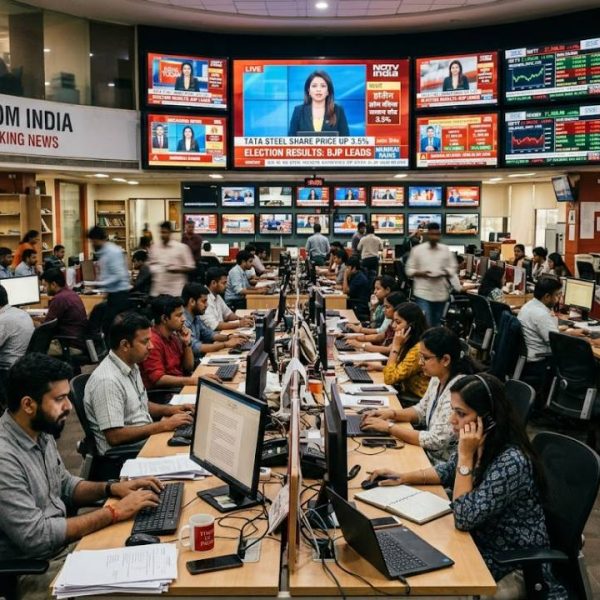

A New York wire service covering emerging market economies had spent a decade building a small bureau focused on business news out of India without ever hiring a dedicated Hindi translator on staff. The desk relied on whichever stringer happened to be available in Delhi or Mumbai and only escalated a translation question when an editor personally doubted a quote.
That casual arrangement held up fine for years since most stories only needed a short quote pulled from a press conference or a company statement. Everything changed the week a major Indian ministry released a dense economic policy announcement in Hindi that reporters worldwide needed translated within hours to file accurate coverage before competing wire services beat them to it. Editors assumed a quick translation from any available contact would be enough given how many previous announcements had passed through the desk without incident.
The rush translation a freelance contact delivered read fluently enough in English but softened a specific phrase about interest rate guidance into something far more ambiguous than what the ministry had actually stated in the original release. A senior editor who happened to read Hindi caught the discrepancy only after the story had already gone out on the wire to dozens of subscriber newsrooms.
That near miss forced the bureau to confront a gap nobody on staff had ever needed to address since no earlier deadline had carried this much financial consequence for readers acting on the story. The editor later said the desk had already been racing every other wire service that week without also needing to walk back a mistranslated policy detail in front of subscribing newsrooms. Nobody on the desk had ever had to explain to a subscribing newsroom why a story needed a correction hours after it had already shaped how traders read the announcement.
Finding a translation partner who understood both the volume a breaking economic story demands and the precision a policy announcement requires took more effort than the bureau expected since several vendors it tried first translated general business Hindi well but had never handled a document with this much riding on a single ambiguous phrase. The bureau eventually built a standing relationship with a provider who understood exactly what a financial newsroom needed before the next fast moving story broke. That search alone stretched across several weeks while the bureau kept filing stories on a tight daily deadline.
Official documents raise the bar even further, because readers may need to prove the translation is faithful. For visas and filings, professional certified translation services attach a formal statement of accuracy. That assurance helps authorities accept the text without extra questions. It also protects the bureau if a reader challenges the wording later.
Hindi Coverage Demands Real Translation Not Just Fluency
Wire services covering fast moving economies often assume that any fluent Hindi speaker can turn a press release into usable copy on deadline but the real requirement is far more exacting than that assumption suggests. A bureau that finally invests in genuine english to hindi translation services built for financial and policy accuracy usually does so only after a near miss like the one this New York bureau narrowly avoided publishing.
The bureau now requires every Hindi language government release headed into a breaking story to pass through a second reviewer with financial subject knowledge since an editor who knows what a market moving phrase looks like can catch a softened detail in minutes rather than letting subscribers trade on an inaccurate translation.
Government Documents Need Translation Built For Policy Nuance
Beyond the breaking news cycle the bureau discovered that its longer form policy analysis pieces required translating full government white papers and regulatory filings that no general news translator could render with the terminology precision a financial analyst would expect. Relying on genuine government translations let the bureau publish policy explainers that subscribing newsrooms could cite with confidence instead of a loose paraphrase nobody could stand behind under scrutiny.
A deputy bureau chief said having that provider ready mattered most when a competing outlet challenged the bureau's reading of a regulatory filing since the team could point to a verified translation instead of defending a rushed interpretation made under deadline pressure.
What Financial Institutions Say About Translation Risk In Emerging Markets
Groups such as the World Bank have long noted that miscommunicated policy signals in emerging economies can move markets in ways that are difficult to correct once the story has already spread which matches almost exactly what this New York bureau narrowly avoided during that one Hindi language announcement.
Reporting standards tracked by Reuters have also emphasized that wire services covering non English speaking economies increasingly need standing translation relationships rather than one off freelance arrangements since a single softened phrase can ripple through every outlet that republishes the story before anyone catches the error.
A Lesson For Newsrooms Covering Fast Moving Economies
Editors who have never had to walk back a mistranslated policy detail often assume a fluent contact and a fast turnaround are enough to satisfy any deadline a breaking economic story might demand. This New York bureau's experience suggests otherwise since one softened phrase very nearly shaped how subscribing newsrooms worldwide understood a major policy announcement before anyone caught the discrepancy.
Building a standing relationship with a translation partner who understands both breaking news speed and policy level precision tends to pay off exactly when a bureau can least afford to learn that lesson live on the wire. Providers who already know what a financial editor needs catch problems that a general freelance contact working under deadline pressure is far more likely to miss. That gap in experience becomes obvious only once a story has already gone out to subscribing newsrooms and there is no time left to quietly fix it.
Newsrooms covering fast-moving economies need more than ad-hoc freelancer arrangements. Professional translation services provide dedicated teams who understand both breaking-news speed and the policy nuance that financial reporting demands. With native linguists, subject-matter expertise, and reliable turnaround, the translation workflow supports the newsroom instead of slowing it down. Building that standing relationship before the next big story breaks is what separates prepared bureaus from those scrambling for help.
The New York bureau now treats accurate Hindi translation and government document translation as a standing part of its India coverage rather than something addressed only after a mistranslated phrase reaches subscribing newsrooms. Other wire services covering fast moving non English speaking economies would do well to build that same relationship before their next breaking policy story tests their process under real deadline pressure since the cost of catching a problem after publication is always higher than the cost of preventing it in the first place.